Among the emerging innovations in this space, marsturf stands out as a modern, powerful, and environmentally friendly choice for residential, commercial, and sports applications. Whether you’re a homeowner looking for a low-maintenance lawn or a business owner looking to improve the visual appeal of your property, Mars turf offers an advanced solution designed for durability, aesthetics, and sustainability.
In this comprehensive guide, we explore Mars turf in detail, covering its features, benefits, installation process, maintenance requirements, environmental impact, cost considerations, design flexibility, and future potential. Each section is carefully structured to provide an in-depth overview while remaining SEO friendly and easy to understand.
What is Marsturf
Marsturf is an advanced synthetic turf system designed to replicate the look and feel of natural grass while providing superior performance and longevity. Unlike traditional artificial grass products, Mars turf integrates modern materials and construction technologies to ensure increased durability, UV resistance, and underfoot comfort.
One of the defining characteristics of Mars Marsturf: The Future Of Smart Artificial Turf Solutions turf is its multi-layer structure. It typically includes a reinforced back layer, a shock-absorbing base, and realistic grass fibers made from high-quality polyethylene or polypropylene. This layered construction allows Mars turf to withstand heavy traffic, making it suitable for both residential lawns and high-activity sports fields.
Another essential feature is its natural aesthetic appeal. Marturf products are designed with different blade lengths and colour tones, mimicking the subtle variations found in real grass. This attention to detail ensures that the finish does not look artificial or too uniform.
Additionally, Mars turf is built to handle a variety of weather conditions. Resists fading under intense sunlight and maintains structural integrity in rain, heat or mildly cool climates. For property owners struggling with uneven natural lawns due to climate or soil issues, Mars turf is a reliable alternative.
Overall, Mars turf is more than just artificial grass. It represents a comprehensive lawn solution that balances beauty, durability and comfort.
Key benefits
Marsturf offers numerous benefits that make it an attractive landscaping option for modern property owners. These benefits go beyond simple aesthetics to practicality, cost savings and sustainability.
Some of the main benefits of mars turf include:
- Low maintenance requirements compared to natural grass
- Long service life and wear resistance
- Reduced water consumption
- Year-round green appearance
- Surface suitable for allergy sufferers
- Pet-friendly and child-safe design
One of the most significant advantages is the minimal need for maintenance. Traditional lawns require regular watering, mowing, fertilising, and pest control. Mars turf eliminates most of these tasks, saving time and ongoing expenses.
Saving water is another big advantage. In regions facing water shortages or high water bills, Mars turf can dramatically reduce consumption. Since it does not require irrigation to maintain its colour and health, it promotes environmentally conscious landscaping practices.
Durability is just as important. Marturf is designed to retain its shape and texture even after years of heavy use. This makes it ideal for children’s playgrounds, sports facilities, and high-traffic commercial spaces.
In addition, Mars turf provides a clean, mud-free environment. After rain, the drainage system ensures quick drying, reduces mess, and improves usability.
Combining comfort, environmental responsibility and long-term reliability, mars turf offers a compelling alternative to natural turf.
Installation process
Installing marsturf is a critical step to ensure long-term performance and visual appeal. While professional installation is often recommended, understanding the process can help property owners make informed decisions.
The first stage involves site preparation. Existing grass, weeds and debris are removed and the ground is levelled. Proper grading is essential to prevent water build-up and ensure effective drainage.
Next, the base layer is installed. This usually consists of compacted crushed stone or gravel. The base provides structural stability and promotes drainage. It is carefully leveled and compacted to create a solid foundation.
A weed control fabric is then placed over the base to prevent unwanted growth under the turf. Then the mars turf rolls are carefully placed and trimmed to fit the area exactly. Tape and glue are used to join the parts smoothly.
A filler material, often made of silica sand or rubber granules, is spread over the surface. This infill supports grass blades, increases stability and improves cushioning.
Finally, the lawn is brushed to raise the blades and create a natural look. The result is a smooth, level and visually appealing green surface.
Proper installation ensures that the mars turf will perform optimally for years. Poor substrates can lead to uneven surfaces or drainage problems, so attention to detail is essential throughout the process.
Maintenance tips
Although marsturf requires significantly less maintenance than natural grass, regular care helps maintain its appearance and functionality.
Basic maintenance includes:
- Removing debris such as leaves and twigs
- Rinse occasionally to remove dust and dirt
- Brushing fibers to maintain an upright position
- Check seams and edges regularly
- Immediate cleaning of animal waste
Regular brushing prevents matting in high-traffic areas. Using a stiff broom or electric brush helps keep the blades upright and evenly spaced.
An occasional rinse with water helps remove accumulated dust or pollen. In pet areas, mild soap and water can be used to clean affected areas and prevent odours.
Weed growth is rare but possible along the edges. Quick removal ensures that the lawn remains clean and tidy.
Importantly, mars turf does not require fertilisers, pesticides or mowing. This eliminates many time-consuming and expensive aspects of lawn care.
With simple regular attention, mars turf maintains its vibrant appearance and structural integrity for many years.
Impact on the environment
Marsturf contributes to environmental sustainability in several significant ways. While synthetic products sometimes raise environmental concerns, modern turf systems are designed with sustainability in mind.
Saving water is perhaps the most important benefit for the environment. Natural lawns require thousands of litres of water per year. Mars turf eliminates this need, making it ideal for drought-prone areas.
Cost analysis
Understanding the cost of marsturf is essential to making an informed investment decision. Although the initial cost of installation may be higher than the cost of seeding natural grass, the long-term savings often offset the cost.
Upfront fees typically include:
- Site preparation
- Basic material
- Lawn materials
- Filling
- Professional work
The price varies depending on the quality of the turf, the size of the area and the local labour force. Premium mars turf products with advanced fibre technology may be more expensive initially but offer extended durability.
Long-term savings come from reduced maintenance costs. Homeowners no longer need to purchase garden equipment, fertilisers, pesticides or irrigation systems. A reduction in water bills can also be significant.
With a lifespan of 10 to 15 years or more, Mars turf can prove cost-effective compared to maintaining natural turf.
Another factor is the increase in property value. A well-installed lawn can improve kerb appeal and attract potential buyers, especially in areas where water conservation is valued.
While the initial investment requires careful budget planning, the long-term financial and practical benefits make Mars turf an attractive option.
Design flexibility Marsturf
Marturf offers exceptional design flexibility for a variety of applications. It is not limited to traditional lawns but can be used creatively in indoor and outdoor spaces.
Common applications include:
- Residential gardens
- Roof terraces
- Children’s playgrounds
- Sports field
- Commercial landscapes
- Spaces for events
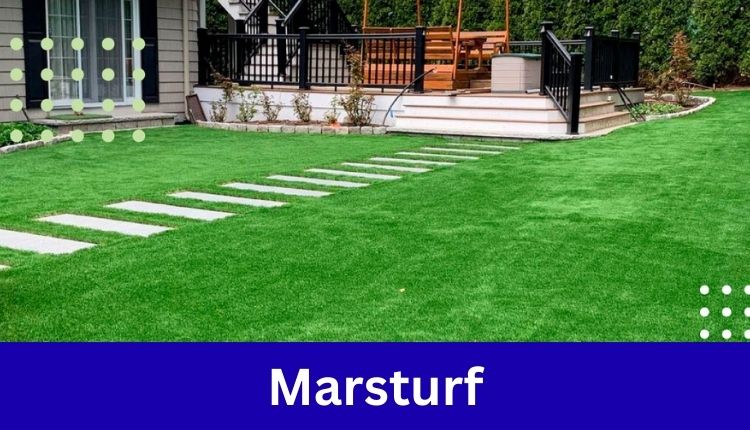
Turf can be customised in terms of blade height, density and colour variation. Some designs include decorative patterns or combine lawn with stone paths and garden elements.
In urban environments, marsturf is particularly valuable for balconies and rooftops where natural grass would be impractical. Thanks to its light construction and drainage capabilities, it is suitable for these environments.
Sports equipment benefits from consistent surface performance. Unlike natural fields that create uneven patches, Mars turf maintains uniformity, increasing safety and playability.
Businesses use Mars turf to create visually appealing entrances and outdoor seating areas. A clean and professional appearance contributes to the brand image and customer experience.
This adaptability makes Mars turf a versatile solution for modern landscaping needs.
Future potential
The future of marsturf looks promising as technology Marsturf: The Future Of Smart Artificial Turf Solutions continues to advance. Manufacturers invest in research to improve realism, sustainability and performance.
Emerging innovations include improved cooling technologies that reduce surface heat under direct sunlight. This addresses one of the common concerns about synthetic turf.
Biodegradable base materials are also being developed to reduce the environmental impact at the end of the product’s life cycle.
Smart lawn systems integrated with sensors could monitor usage patterns, maintenance needs and environmental conditions. Such improvements can further increase efficiency and longevity.
As urbanisation increases and water conservation becomes more critical, demand for alternatives such as mars turf is expected to grow. Cities seeking sustainable landscaping solutions can implement artificial turf in public spaces and recreational facilities.
Thanks to continuous improvement and responsible manufacturing practices, mars turf is poised to remain the leading choice in modern garden design.
Conclusion
Marsturf represents a significant development in artificial turf technology. By combining realistic aesthetics, durability and ecological benefits, it offers a practical solution for homeowners, businesses and sports facilities. From installation to maintenance, Mars Turf simplifies lawn management while providing year-round greenery and long-term cost efficiency.
As sustainability and comfort become Marsturf: The Future Of Smart Artificial Turf Solutions increasingly important in landscaping decisions, Mars turf stands out as a prudent investment. Whether you’re upgrading your backyard, designing a commercial property or planning a recreational space, Mars turf provides a Marsturf reliable and visually appealing alternative to natural grass.
Frequently asked questions
- How long does Mars turf last?
Marturf typically lasts 10 to 15 years, depending on use and maintenance.
- Is Mars turf safe for children and pets?
Yes, most marsturf products are designed with non-toxic materials and safe fillings.
- Does marturf heat up in the sun?
It can get warm in direct sunlight, but newer cooling technologies help reduce heat retention.
- Can Mars turf be installed on concrete?
Yes, it can be installed on concrete surfaces with proper preparation and padding.
- Is Mars turf environmentally friendly?
It conserves water and eliminates chemical turf treatments, making it a more sustainable option compared to natural grass in many scenarios.